
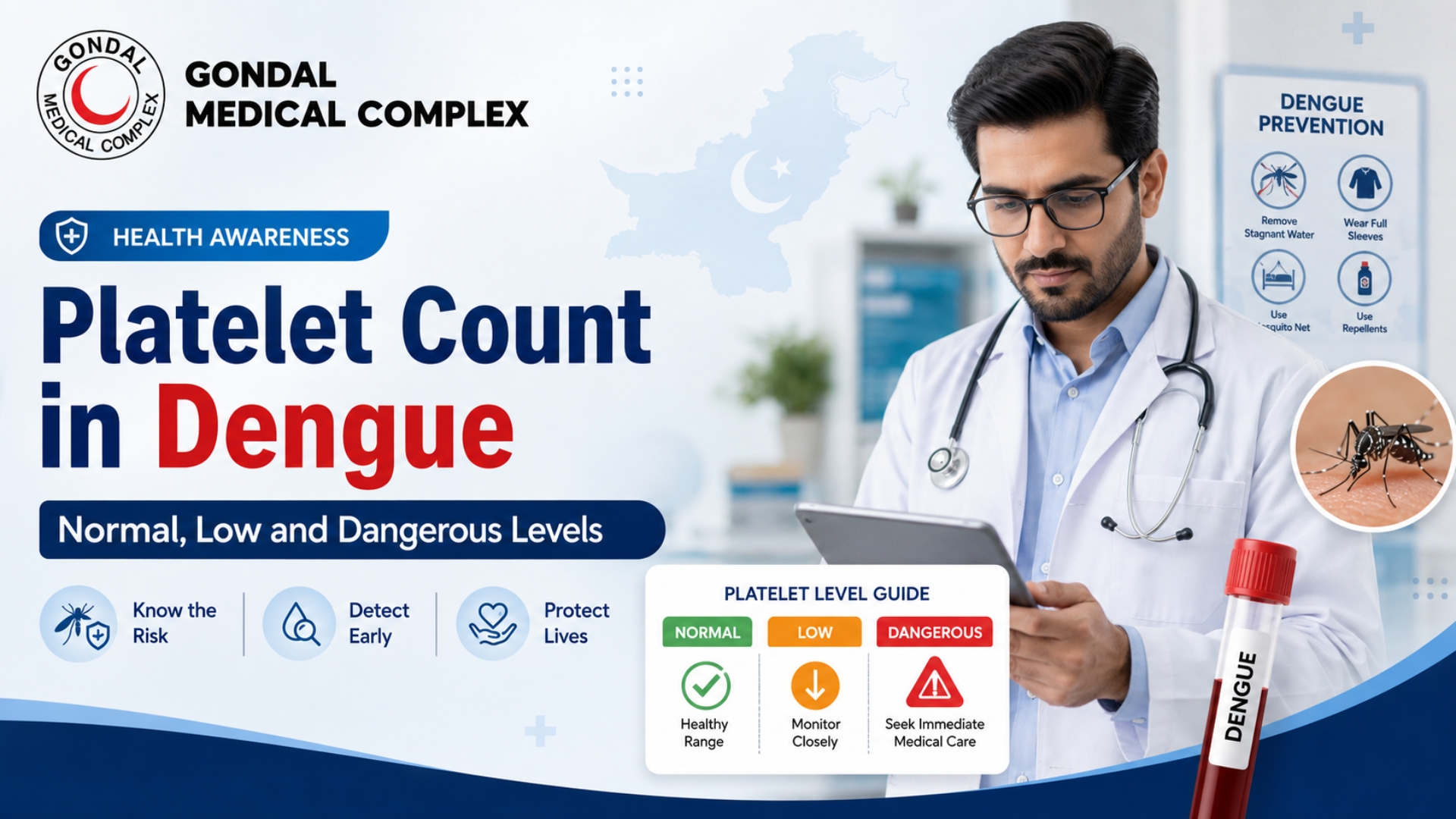
Platelet Count in Dengue: Normal, Low and Dangerous Levels
A falling platelet count in dengue is one of the biggest concerns for patients and families. As soon as a blood report shows low platelets, many people become anxious, start searching for platelet donors or assume that an immediate transfusion is necessary.
Platelet levels are important, but one number does not tell the complete story. Doctors also assess whether the count is falling rapidly, whether the patient has active bleeding, whether the haematocrit is rising, and whether blood pressure, pulse, breathing, hydration and urine output remain stable.
A patient with a very low count may not always have serious bleeding, while another patient with a higher count may still require urgent treatment because of shock, plasma leakage or organ complications. For this reason, dengue management should be based on the patient’s complete clinical condition rather than the platelet count alone.
Medical disclaimer: This article provides general health information only. Dengue testing, monitoring, hospital admission and transfusion decisions must be made by a qualified healthcare professional.
What Are Platelets?
Platelets, also called thrombocytes, are small blood components produced in the bone marrow. Their primary function is to gather at an injured blood vessel and help form a clot that slows or stops bleeding.
A complete blood count, commonly called a CBC, measures platelets along with white blood cells, red blood cells, haemoglobin and haematocrit.
A normal adult platelet count is generally between 150,000 and 450,000 platelets per microlitre of blood, although reference ranges can vary slightly between laboratories. A level below 150,000 is known as thrombocytopenia.
Why Does Platelet Count Fall in Dengue?
Dengue can lower the platelet count through several processes. The infection can temporarily affect platelet production, increase platelet destruction and alter the body’s clotting system.
During the early fever phase, the count may remain normal or begin falling gradually. The decrease can become more noticeable around the time the fever settles, which may also mark the beginning of dengue’s critical phase.
The critical phase generally lasts around 24 to 48 hours. Some patients can deteriorate quickly during this period, so a lower temperature does not always mean the illness has ended.
Platelet Count in Dengue: Levels Explained
The following table provides a general interpretation of platelet levels. These categories describe thrombocytopenia overall and should not be treated as a fixed dengue severity scale.
| Platelet count per microlitre | General interpretation | What it may mean in dengue |
|---|---|---|
| 150,000–450,000 | Generally normal | Dengue is still possible, especially during the early phase |
| 100,000–149,000 | Mildly low | Follow the doctor’s monitoring plan and watch the trend |
| 50,000–99,000 | Moderately low | Closer clinical monitoring may be needed |
| 20,000–49,000 | Seriously low | Bleeding risk is greater and urgent medical assessment is important |
| Below 20,000 | Severely low | Requires immediate medical supervision |
| Below 10,000 with active bleeding | Extremely severe | Pakistan NIH guidance states that platelet transfusion may be considered |
General platelet classifications identify 100,000 to 150,000 as mildly low, 50,000 to 100,000 as moderately low, below 50,000 as serious and below 20,000 as severe thrombocytopenia. These ranges must still be interpreted according to the patient’s symptoms and diagnosis.
Is a Platelet Count Below 150,000 Dangerous?
A count below 150,000 is lower than the usual reference range, but it is not automatically an emergency. Mild thrombocytopenia may occur without significant bleeding.
In suspected dengue, the doctor may recommend repeat CBC tests to determine whether the count is stable, decreasing or beginning to recover. The direction and speed of change can be more informative than a single result.
For example, a decrease from 170,000 to 120,000 requires observation, but it does not automatically mean that the patient needs platelets or hospital admission.
Is a Platelet Count Below 100,000 Serious?
A count below 100,000 deserves close attention in a patient with dengue. Pakistan’s dengue advisory includes platelets below 100,000 among laboratory findings associated with dengue haemorrhagic fever when warning signs and other clinical abnormalities are present.
However, a count of 90,000 does not by itself confirm severe dengue. The doctor will also look for:
- Abdominal pain
- Persistent vomiting
- Mucosal bleeding
- Increasing haematocrit
- Fluid accumulation
- Low blood pressure
- Rapid or weak pulse
- Reduced urine output
- Drowsiness or restlessness
- Breathing difficulty
A rapid platelet decrease combined with a rising haematocrit is a recognized warning pattern because it may suggest plasma leakage and progression toward severe illness.
Is a Platelet Count Below 50,000 Dangerous?
A count below 50,000 is considered seriously low in general platelet-disorder classifications, and the risk of bleeding becomes greater. Even ordinary activities or minor injuries may cause bleeding more easily at this level.
For a dengue patient, this level requires prompt medical review, especially when accompanied by:
- Bleeding from the nose or gums
- Blood in vomit
- Black or bloody stool
- Blood in urine
- Heavy menstrual bleeding
- Widespread bruising
- Tiny red or purple spots on the skin
- Dizziness or fainting
- Severe abdominal pain
- Cold or clammy skin
The absence of bleeding does not mean that monitoring can stop. Internal plasma leakage and shock can develop without obvious external bleeding.
What Happens When Platelets Fall Below 20,000?
A platelet count below 20,000 is classified as severe thrombocytopenia. At this level, spontaneous bleeding becomes a greater concern and urgent medical supervision is needed.
The patient should not stay at home waiting for the next blood test if the count is this low. A medical team needs to assess:
- Current and previous platelet reports
- Evidence of active bleeding
- Blood pressure and pulse
- Haematocrit trend
- Consciousness and behaviour
- Breathing
- Hydration and urine output
- Liver and kidney function
- Other medicines and medical conditions
Is a Platelet Count Below 10,000 an Emergency?
A count below 10,000 is extremely low and requires immediate hospital assessment. Pakistan’s National Institute of Health states that platelet transfusion may be warranted when there is severe thrombocytopenia below 10,000/mm³ and active bleeding. Significant bleeding may instead require whole blood or red blood cell treatment based on the doctor’s assessment.
This does not mean every patient below 10,000 will automatically receive the same treatment. The healthcare team must consider active bleeding, circulation, haematocrit and the overall clinical picture.
What Is a Dangerous Platelet Count in Dengue?
There is no single platelet number that defines danger for every dengue patient.
A count becomes more concerning when it is:
- Falling rapidly between consecutive CBC reports
- Below 50,000
- Below 20,000
- Accompanied by active bleeding
- Associated with rising haematocrit
- Accompanied by unstable blood pressure or pulse
- Combined with severe abdominal pain or persistent vomiting
- Associated with breathing difficulty, confusion or reduced urination
The most dangerous situation is not simply “low platelets.” It is low or falling platelets combined with severe bleeding, plasma leakage, shock or organ impairment. WHO classifies severe dengue according to severe plasma leakage, clinically significant bleeding or severe organ involvement rather than a platelet number alone.
Why One Platelet Report Is Not Enough
A single CBC report provides only one point in time. Dengue is a changing illness, and blood counts can rise or fall over several days.
Doctors may compare reports to assess:
- How quickly the platelet count is decreasing
- Whether the white blood cell count is low
- Whether haematocrit is increasing
- Whether the patient is entering the critical phase
- Whether platelet recovery has started
For outpatient dengue cases, CDC guidance recommends daily evaluation during the fever phase and the subsequent critical phase, including review of complete blood counts, hydration, warning signs and the time when fever begins to settle.
The required testing frequency depends on the patient’s condition. Patients with warning signs, very low counts, pregnancy, chronic disease or poor access to emergency care may require closer observation.
Platelet Count and Haematocrit: Why Both Matter
Platelets receive most of the public attention, but haematocrit is also important.
Haematocrit represents the proportion of red blood cells in the blood. When plasma leaks from blood vessels during severe dengue, the blood can become more concentrated and haematocrit may rise.
A rising haematocrit combined with a rapidly falling platelet count can indicate progression toward the critical phase. Haematocrit must always be interpreted alongside vital signs, hydration and fluid treatment because intravenous fluids can lower the reading.
A falling haematocrit does not always mean improvement. When it occurs with unstable vital signs, it may suggest significant internal bleeding and requires immediate medical action.
Does Every Dengue Patient With Low Platelets Need a Transfusion?
No. A low platelet count alone is not an automatic reason for platelet transfusion.
CDC dengue guidance advises against prophylactic platelet transfusions given only because the count is low. Such transfusions have not been shown to reduce the risk of severe bleeding and may contribute to fluid overload and longer hospitalization.
Transfusion decisions depend on factors such as:
- Active or clinically significant bleeding
- Severity of thrombocytopenia
- Blood pressure and circulation
- Haematocrit trend
- Planned emergency procedures
- Pregnancy or other medical conditions
- Use of blood-thinning medicines
- Overall clinical stability
In clinically significant bleeding, red blood cells or whole blood may be more appropriate than platelets. This decision must be made by the treating medical team.
Signs of Bleeding With Low Platelets
Low platelets may cause no visible symptoms initially. When bleeding occurs, signs can include:
- Red or purple spots under the skin
- Easy or unexplained bruising
- Bleeding gums
- Nosebleeds
- Prolonged bleeding from a small wound
- Blood in urine
- Heavy menstrual bleeding
- Vomiting blood
- Black, tar-like stool
Bleeding that does not stop, vomiting blood, black stool, fainting or a change in consciousness requires emergency medical attention.
Dengue Warning Signs That Matter More Than the Number
Do not wait for the platelet count to reach a particular level before visiting a hospital. Seek urgent care if the patient develops:
- Severe or continuous abdominal pain
- Persistent or repeated vomiting
- Bleeding from the nose or gums
- Vomiting blood
- Black or bloody stool
- Extreme drowsiness or irritability
- Restlessness or confusion
- Pale, cold or clammy skin
- Rapid or weak pulse
- Breathing difficulty
- Dizziness or fainting
- Reduced urine output
- Inability to drink or retain fluids
Dengue warning signs often appear as the fever begins to decline. The patient can deteriorate within hours during this period.
What Should You Do When Platelets Are Falling?
Follow the Recommended CBC Schedule
Repeat blood tests only as advised by the treating doctor. Testing too frequently without clinical review may increase anxiety without improving treatment.
Monitor the Patient, Not Just the Report
Keep track of:
- Temperature
- Oral fluid intake
- Vomiting
- Urination
- Abdominal pain
- Bleeding
- Alertness
- Breathing
- Skin temperature and colour
Maintain Appropriate Hydration
Patients who can drink should take suitable fluids regularly. Dehydration can occur because of fever, vomiting and poor intake. Patients with kidney, liver or heart disease should follow individualized fluid advice because excessive fluid can also be harmful.
Avoid Medicines That Increase Bleeding Risk
Patients with suspected dengue should generally avoid:
- Aspirin
- Ibuprofen
- Diclofenac
- Naproxen
- Other non-steroidal anti-inflammatory medicines
Paracetamol is generally used for fever under medical guidance. Pakistan NIH advises avoiding aspirin and non-steroidal anti-inflammatory medicines because they can increase bleeding complications.
Avoid Injury
When platelets are very low:
- Avoid contact sports
- Do not use razors that may cut the skin
- Use a soft toothbrush
- Avoid unnecessary injections
- Do not take unapproved medicines or supplements
- Seek advice before travelling far from medical care
Can Food or Juice Increase Platelets Quickly?
No specific fruit, juice, leaf extract or food has been proven to rapidly restore the platelet count in dengue or prevent severe dengue.
Nutritious food and proper hydration can support general recovery, but they do not replace:
- Medical assessment
- CBC monitoring
- Fluid management
- Observation for warning signs
- Hospital treatment when required
Patients should not delay hospital care while waiting for papaya leaf juice, pomegranate juice, coconut water or another home remedy to increase platelet levels.
Some herbal products may interact with medicines, affect the liver or create false reassurance. Discuss any supplement with the treating doctor.
When Do Platelets Start Increasing?
Platelet counts commonly begin recovering after the critical phase has passed and the patient enters the recovery phase. The exact timing varies from person to person.
Improvement is suggested by:
- A rising platelet trend
- Stable haematocrit
- Stable vital signs
- Normal urine output
- Improved appetite
- Ability to drink fluids
- Disappearance of warning signs
- No evidence of bleeding
CDC hospital discharge guidance includes an increasing platelet trend and stable haematocrit among the laboratory criteria considered alongside clinical improvement.
The count does not always need to return completely to normal before discharge. The treating team considers the overall trend and clinical stability.
Who Needs Closer Monitoring?
Closer medical observation may be required for:
- Infants and young children
- Pregnant women
- Adults older than 65
- Patients with active bleeding
- People taking anticoagulant medicines
- Patients with kidney or liver disease
- People with heart disease
- Patients with diabetes or hypertension
- People who cannot drink enough fluids
- Patients living far from emergency medical care
CDC guidance lists pregnancy, kidney failure, coagulopathy, warning signs, shock, organ dysfunction and selected underlying or social risks among reasons for inpatient assessment.
Frequently Asked Questions
What is the normal platelet count in dengue?
A generally normal adult platelet count is around 150,000 to 450,000 per microlitre. However, a normal count early in the illness does not rule out dengue because platelets may fall later.
Is a platelet count of 100,000 dangerous in dengue?
A count of 100,000 is below normal and needs monitoring, but it is not automatically life-threatening. The trend, haematocrit, bleeding, vital signs and warning symptoms determine how serious the condition is.
Is a platelet count of 50,000 dangerous?
A count around or below 50,000 is seriously low and carries a greater bleeding risk. A dengue patient at this level should receive prompt medical assessment and close monitoring.
At what platelet count is transfusion needed in dengue?
There is no universal count at which every patient must receive platelets. Pakistan NIH guidance says platelet transfusion may be warranted with a count below 10,000/mm³ and active bleeding. Preventive transfusion for a low count without bleeding is generally not recommended.
Can dengue be severe even when platelets are above 100,000?
Yes. Severe dengue is identified through severe plasma leakage, shock, major bleeding or organ involvement. A patient can deteriorate before the platelet count becomes extremely low.
How often should CBC be repeated in dengue?
The frequency depends on the day of illness, symptoms, platelet trend and medical condition. Some outpatients may need daily review during the fever and critical phases, while unstable or hospitalized patients may require more frequent monitoring.
Do platelets increase immediately after the fever goes down?
Not always. The fever may settle just as the patient enters the critical phase, during which platelets can remain low or continue falling. Recovery should be judged by symptoms, vital signs, haematocrit and the platelet trend rather than temperature alone.
Conclusion
Monitoring the platelet count in dengue is important, but the count should never be evaluated in isolation. A normal adult count is generally between 150,000 and 450,000, while levels below 150,000 indicate thrombocytopenia.
Counts below 100,000 require closer attention, below 50,000 are seriously low, and below 20,000 represent severe thrombocytopenia. However, dangerous dengue is determined by the complete clinical picture, including bleeding, haematocrit changes, blood pressure, pulse, urine output, breathing and warning signs.
Low platelets do not automatically mean that a transfusion is required. Treatment decisions should always be made by qualified healthcare professionals after examining the patient and reviewing consecutive blood reports.
Call to Action
Do not wait for platelets to reach a critically low level before seeking professional advice. If a patient has falling platelets, persistent vomiting, abdominal pain, bleeding, severe weakness, breathing difficulty or reduced urine output, arrange an urgent medical evaluation.
For medical consultation, diagnostic guidance and information about available healthcare services, visit Gondal Medical Complex. Timely monitoring and appropriate treatment can help identify dengue complications before they become life-threatening.