
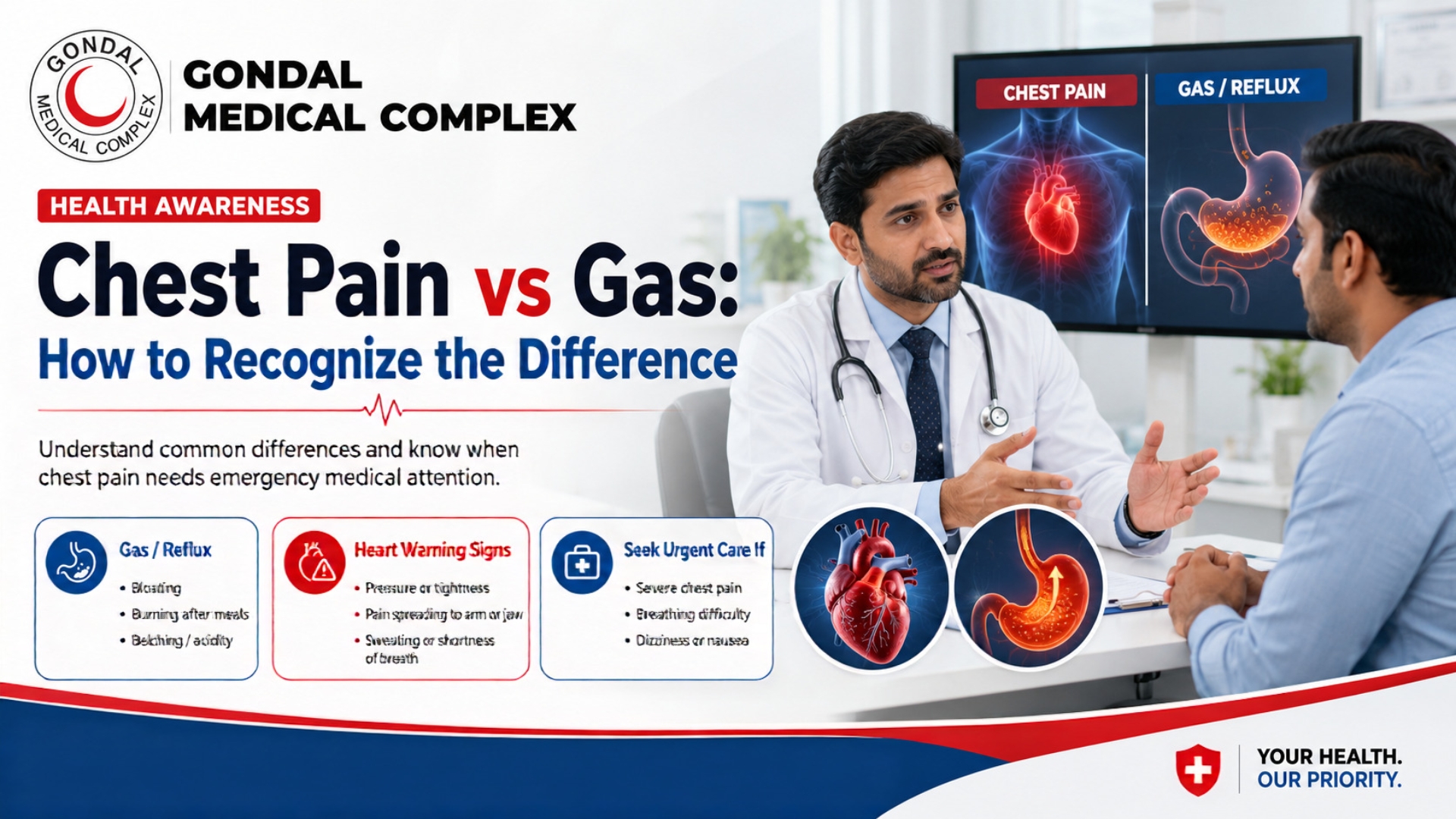
Chest Pain vs Gas: How to Recognize the Difference
A burning, tight or uncomfortable feeling in the chest is often blamed on gas or acidity. Sometimes that assumption is correct, but chest discomfort can also be caused by angina, a heart attack, a lung condition or another medical emergency.
Understanding chest pain vs gas can help you notice important warning signs, but symptoms alone cannot always identify the cause safely. Heart-related chest pain may feel like indigestion or burning, while acid reflux can cause discomfort directly behind the breastbone. When the cause is uncertain, it is safer to seek medical assessment than to wait for an antacid or home remedy to work.
Heart-attack warning signs may include pressure, squeezing, fullness or pain in the centre of the chest. Discomfort may spread to one or both arms, the back, neck, jaw or upper abdomen and may occur with breathlessness, sweating, nausea or light-headedness.
Emergency warning: Seek immediate emergency care for sudden or persistent chest pain, particularly when it spreads to the arm, jaw, neck or back or occurs with sweating, nausea, dizziness, fainting or shortness of breath. Do not drive yourself when a heart attack is possible.
Medical disclaimer: This article provides general health education. It cannot determine whether an individual episode of chest pain is caused by gas, acid reflux, the heart or another condition.
What Does “Gas Pain in the Chest” Mean?
Gas is normally produced during digestion and may also enter the digestive tract when a person swallows air. Excess gas can contribute to:
- Belching
- Abdominal bloating
- A feeling of fullness
- Upper abdominal pressure
- Cramping
- Discomfort after eating
- Passing more wind than usual
Indigestion may cause discomfort or burning in the upper abdomen together with belching, bloating, nausea or heartburn. Because the upper abdomen is located close to the chest, digestive discomfort may be described by patients as chest gas.
However, burning discomfort behind the breastbone is more commonly associated with heartburn or acid reflux than with intestinal gas itself.
What Is Acid Reflux?
Acid reflux occurs when stomach contents travel upward into the oesophagus, the tube connecting the mouth to the stomach. It may cause:
- Burning behind the breastbone
- A sour or acidic taste
- Food or liquid coming back into the throat
- Belching
- Nausea
- Throat irritation
- Cough or hoarseness
- Discomfort that worsens after eating
- Symptoms that worsen when bending or lying down
Frequent or troublesome reflux may be diagnosed as gastro-oesophageal reflux disease, commonly called GERD.
GERD can also cause chest pain, which is why new or unexplained chest symptoms should not automatically be treated as simple acidity.
Chest Pain vs Gas: Main Differences
The following comparison describes common patterns, not guaranteed diagnostic rules.
| Feature | Gas, indigestion or reflux may be more likely | Heart-related pain may be more likely |
|---|---|---|
| Type of discomfort | Burning, bloating, upper abdominal pressure or fullness | Pressure, squeezing, heaviness, fullness, tightness or pain |
| Location | Upper abdomen or behind the breastbone | Centre or left side of chest, although location can vary |
| Relation to food | May begin after a large, spicy or fatty meal | May occur with exertion, stress or without an obvious trigger |
| Relation to position | May worsen when bending or lying down | Usually not consistently controlled by position |
| Belching or sour taste | More common | Does not safely rule out a heart problem |
| Pain spreading elsewhere | Less characteristic | May spread to the arms, back, neck, jaw or stomach |
| Other symptoms | Bloating, regurgitation or nausea | Sweating, breathlessness, nausea, weakness or light-headedness |
| Relief from antacid | May improve | Improvement does not safely exclude heart disease |
| Urgency | Medical review if recurrent or severe | Emergency assessment when sudden, persistent or associated with warning signs |
Heart-related pain can sometimes feel like burning or indigestion, and angina may even resemble an upset stomach. Therefore, no single symptom in this table can prove that the discomfort is only gas.
Symptoms More Suggestive of Gas or Indigestion
Digestive discomfort may be more likely when the patient experiences several of the following:
- Abdominal bloating
- Frequent belching
- Fullness soon after starting a meal
- Uncomfortable fullness after eating
- Upper abdominal burning
- Sour liquid reaching the throat
- Symptoms after particular foods
- Discomfort that becomes worse after lying down
- Improvement after passing wind or having a bowel movement
Indigestion commonly causes upper abdominal discomfort, burning, bloating, belching or nausea. Heartburn may accompany indigestion but is considered a separate symptom resulting from acid reflux.
Even when these digestive symptoms are present, seek urgent help if the discomfort is accompanied by chest, jaw, neck or arm pain, breathlessness, heavy sweating or severe weakness.
Symptoms More Suggestive of a Heart Problem
Heart-related chest discomfort may feel like:
- Pressure
- Tightness
- Squeezing
- Heaviness
- Fullness
- Crushing discomfort
- Burning or indigestion
- A dull ache
It may last for more than a few minutes or go away and return. The discomfort can spread into one or both arms, the shoulders, neck, jaw, back or upper abdomen.
Other heart-attack symptoms may include:
- Shortness of breath
- Cold sweating
- Nausea or vomiting
- Dizziness
- Light-headedness
- Unusual weakness
- Fainting
- A rapid or irregular heartbeat
- A strong feeling that something is seriously wrong
Heart attacks do not always cause dramatic or unbearable pain. Some people experience mild pressure, burning or discomfort resembling acidity.
When Chest Pain Is an Emergency
Seek immediate emergency care when chest discomfort:
- Is sudden and does not go away
- Feels heavy, tight, crushing or squeezing
- Spreads to either arm, the jaw, neck, back or stomach
- Occurs with sweating
- Occurs with nausea or vomiting
- Occurs with dizziness or fainting
- Occurs with shortness of breath
- Is associated with severe weakness
- Develops during exertion
- Is new in a patient with diabetes, hypertension or heart disease
- Feels different from previous acidity or gas symptoms
Chest pain with pressure, nausea, sweating, dizziness or shortness of breath requires immediate medical attention.
Do not delay emergency evaluation to:
- Finish a meal
- Wait for the pain to become severe
- Search symptoms online
- Try multiple antacids
- Sleep and see whether it improves
- Travel alone over a long distance
- Drive yourself to the hospital
Early evaluation focuses on quickly identifying or excluding life-threatening causes of acute chest pain.
Can Heart-Attack Pain Feel Like Gas?
Yes. Heart-attack discomfort may be mistaken for:
- Gas
- Acidity
- Indigestion
- Heartburn
- Upper abdominal pressure
- Muscle pain
The American Heart Association notes that heart-related pain may be felt in the upper abdomen and that angina can feel like an upset stomach. The NHS also warns that heart-attack pain may feel like burning or indigestion.
For this reason, belching, bloating or recent food intake should not be used as proof that the heart is not involved.
Can Gas Cause Severe Chest Pain?
Digestive gas, indigestion and reflux can create significant discomfort. However, the severity of pain does not reliably determine whether a condition is harmless or dangerous.
A mild symptom can sometimes have a serious cause, and severe digestive pain may still require medical treatment. New, severe or unexplained chest pain should be evaluated rather than managed through self-diagnosis.
Can Burping Relieve Heart-Related Pain?
Belching may relieve pressure caused by swallowed air or digestive gas, but temporary improvement does not prove that the discomfort was non-cardiac.
A patient may have reflux and heart disease at the same time. Symptoms can also naturally improve and return during a heart attack or angina episode. Heart-attack discomfort may last several minutes or go away and then return.
Therefore, do not rely on burping, drinking water or taking an antacid as a diagnostic test.
What Is Angina?
Angina is chest pain or discomfort caused by insufficient oxygen-rich blood reaching the heart muscle. It may feel like pressure or squeezing and may spread to the shoulders, arms, neck, jaw, abdomen or back.
Angina may be triggered by:
- Physical activity
- Emotional stress
- Cold weather
- Other situations that increase the heart’s workload
Some episodes have no obvious trigger. Angina may occur with nausea, breathlessness, dizziness or sweating.
New chest pain, pain occurring at rest or pain that is more severe or longer-lasting than usual may represent an acute coronary syndrome and needs emergency assessment.
Heart-Attack Symptoms in Women
Chest pain remains a common heart-attack symptom in women, but women may be more likely to experience accompanying symptoms such as:
- Shortness of breath
- Nausea
- Vomiting
- Back pain
- Jaw pain
- Light-headedness
- Unusual tiredness
- Cold sweating
Women may also describe pressure, squeezing, fullness or discomfort rather than using the word “pain.”
Symptoms should not be dismissed as anxiety, fatigue, acidity or hormonal discomfort without appropriate assessment.
Chest Pain in People With Diabetes
People with diabetes can develop cardiovascular disease, and some may experience less typical warning symptoms. Chest discomfort may be mild, while breathlessness, sweating, nausea or unexplained weakness may be more noticeable.
Because the appearance and intensity of symptoms vary, people with diabetes should take new chest pressure, unexplained breathlessness or a significant change in exercise tolerance seriously.
Other Serious Causes of Chest Pain
Not all emergency chest pain comes from the heart. Serious non-digestive causes include:
Pulmonary Embolism
A blood clot in the lung may cause sudden chest pain, breathlessness, rapid heartbeat, coughing or coughing up blood.
Collapsed Lung
A collapsed lung can cause sudden sharp chest pain and breathing difficulty.
Aortic Dissection
A tear in the wall of the body’s main artery may cause sudden, severe chest or upper-back pain.
Pneumonia or Pleurisy
Lung infection or inflammation around the lungs can cause sharp pain that becomes worse when breathing deeply or coughing.
These conditions require urgent medical evaluation and cannot be identified accurately through an online symptom comparison.
Can Muscle Pain Be Mistaken for Gas or Heart Pain?
Chest-wall pain can develop from:
- Muscle strain
- Heavy lifting
- Exercise
- Coughing
- Rib injury
- Inflammation around the ribs
- Poor posture
Pain that becomes worse with certain movements, deep breathing or pressure over a specific chest area may suggest a chest-wall cause. However, this pattern does not completely exclude heart or lung disease, especially when the discomfort is new or accompanied by other symptoms.
Can Anxiety Cause Chest Pain?
Anxiety and panic can cause chest tightness, rapid breathing, palpitations, dizziness, sweating and a sense of fear. These symptoms can closely resemble a heart problem.
A first episode of severe chest pain or breathlessness should not automatically be labelled as anxiety. Medical assessment may be required to exclude cardiac, respiratory and other physical causes.
Common Causes of Gas and Reflux Symptoms
Digestive chest discomfort may be triggered or worsened by:
- Eating large meals
- Eating quickly
- Lying down soon after eating
- Fatty or spicy food
- Carbonated drinks
- Smoking
- Excess body weight
- Pregnancy
- Certain medicines
- A weakened lower oesophageal sphincter
GERD may develop when the lower oesophageal sphincter becomes weak or relaxes when it should remain closed, allowing stomach contents to move upward.
Triggers differ between patients, so a food and symptom record may be more useful than avoiding a long list of foods without evidence.
When Digestive Symptoms Need Medical Review
Arrange a doctor’s appointment when presumed gas, indigestion or reflux:
- Happens repeatedly
- Frequently wakes you at night
- Does not improve with basic measures
- Requires regular self-medication
- Causes difficulty swallowing
- Causes pain during swallowing
- Occurs with persistent vomiting
- Occurs with unexplained weight loss
- Occurs with loss of appetite
- Causes vomiting of blood
- Causes black or tar-like stool
- Is associated with anaemia
Chest pain, swallowing problems, gastrointestinal bleeding, persistent vomiting and unexplained weight loss may indicate GERD complications or another serious condition.
How Doctors Evaluate Chest Pain
A doctor may ask:
- When the pain began
- What the pain feels like
- Where it is located
- Whether it spreads
- What triggers or relieves it
- Whether it occurs with exertion
- Whether breathlessness, sweating or nausea is present
- Whether the patient has diabetes, hypertension or heart disease
- Which medicines the patient uses
- Whether similar episodes have occurred before
Depending on the suspected cause, assessment may include:
- Blood pressure, pulse and oxygen measurement
- Physical examination
- Electrocardiogram
- Cardiac troponin blood tests
- Chest X-ray
- Echocardiogram
- CT or other imaging
- Additional blood investigations
- Digestive-system testing after urgent causes have been excluded
An ECG records the heart’s electrical activity and is commonly used when a heart attack or another cardiac condition is suspected. High-sensitivity troponin is the preferred blood biomarker for detecting heart-muscle injury.
One normal initial test may not always complete the evaluation. Doctors interpret symptoms, ECG findings, troponin patterns, medical history and imaging together.
What to Do While Waiting for Medical Help
When a heart attack or another emergency is possible:
- Stop physical activity
- Sit or lie in a safe position
- Ask someone to stay with you
- Contact emergency medical services
- Follow instructions from the emergency team
- Keep the door accessible for responders
- Gather your medicine list and medical records when possible
Do not take aspirin or another medicine unless a qualified healthcare professional or emergency service instructs you to do so. Aspirin may be inappropriate for some patients, including those with an allergy, active bleeding or another cause of chest pain.
Managing Recurrent Gas or Reflux After Medical Assessment
After a doctor has excluded serious causes, recommendations may include:
- Eating smaller meals
- Eating slowly
- Avoiding lying down immediately after eating
- Identifying personal food triggers
- Reducing carbonated drinks
- Maintaining a medically appropriate weight
- Avoiding smoking
- Using reflux or gas medicine as advised
- Investigating persistent symptoms
Patients should not use over-the-counter antacids indefinitely without medical guidance. Persistent symptoms may require evaluation for GERD, an ulcer, gallbladder disease or another digestive condition.
Frequently Asked Questions
How can I tell whether chest pain is gas or the heart?
Gas or reflux is more likely to occur with bloating, belching, a sour taste or symptoms after eating and lying down. Heart-related pain is more likely to feel like pressure, squeezing or heaviness and may spread to the arm, jaw, neck or back. However, symptoms overlap, so uncertain or new chest pain requires medical assessment.
Where is gas pain usually felt?
Gas discomfort is commonly felt in the abdomen and may cause upper abdominal pressure, bloating or cramping. Acid reflux can create burning behind the breastbone, which may be mistaken for heart pain.
Does heart pain occur on the left side only?
No. Heart-related discomfort often occurs in the centre of the chest but may also be felt on either side or in the shoulders, arms, neck, jaw, back or upper abdomen.
Can heart pain feel like burning?
Yes. Heart-related chest pain may feel like burning or indigestion rather than crushing pain. Sudden or persistent burning with breathlessness, sweating, nausea or pain spreading elsewhere requires emergency assessment.
Can acidity cause left-sided chest pain?
Reflux discomfort may be felt behind the breastbone and can sometimes be described on one side. The location alone cannot safely determine the cause.
Does relief after an antacid prove it was gas?
No. Improvement after an antacid may support a digestive cause, but it does not safely exclude angina or a heart attack. Heart-related discomfort can improve temporarily and return.
How long can gas-related chest discomfort last?
The duration varies according to the cause, food intake and digestive condition. Persistent, severe or recurrent chest discomfort should be medically assessed rather than repeatedly treated at home.
When should I visit an emergency department?
Seek emergency care when chest pain is sudden, persistent, squeezing or heavy, spreads to the arm, neck, jaw or back, or occurs with sweating, nausea, dizziness, fainting or shortness of breath.
Can an ECG confirm that chest pain is not from the heart?
An ECG is an important initial test, but doctors may also need troponin blood tests, repeated assessment and other investigations. One result must be interpreted with the complete clinical picture.
Can young people have heart-related chest pain?
Yes. Although heart-attack risk generally increases with age and cardiovascular risk factors, serious cardiac, lung and vascular conditions can also occur in younger people. Severe or unexplained symptoms should not be dismissed solely because of age.
Conclusion
Comparing chest pain vs gas can provide useful clues, but it cannot safely replace a medical examination. Gas, indigestion and acid reflux commonly cause bloating, belching, upper abdominal discomfort, heartburn or a sour taste.
Heart-related pain is more likely to feel like pressure, squeezing, heaviness or fullness and may spread to the arms, back, neck, jaw or stomach. Sweating, nausea, dizziness, fainting and breathlessness are particularly important warning signs.
The most important rule is simple: when chest discomfort is new, persistent, severe or difficult to explain, do not assume it is only gas. Timely ECG, troponin testing and clinical assessment can help identify or exclude a heart emergency.
Call to Action
For persistent digestive discomfort, recurring chest symptoms or cardiovascular risk assessment, arrange a professional consultation rather than relying on repeated self-treatment.
Gondal Medical Complex provides 24/7 emergency care, cardiology and internal-medicine support, diagnostic facilities and specialist consultations for patients in Gujranwala. The hospital is located on Hospital Road near Munir Chowk.
Visit Gondal Medical Complex for appointment and department information. For sudden or severe chest pain, go directly to the nearest emergency department or contact emergency medical services without delay.