
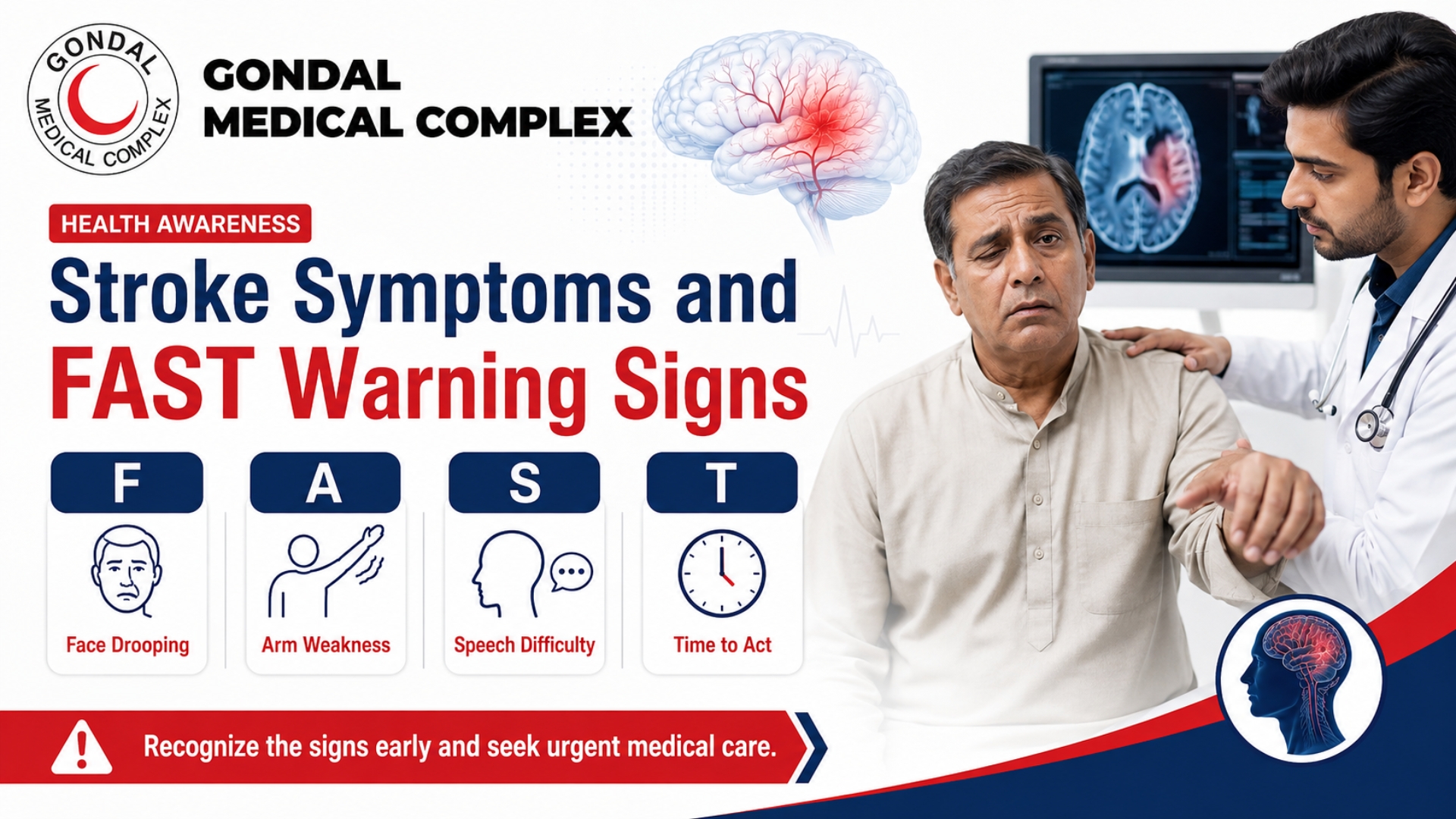
Stroke Symptoms and FAST Warning Signs
A stroke can begin suddenly while a person is eating, walking, working or sleeping. One side of the face may droop, an arm may become weak or speech may become unclear. These changes can appear mild at first, but they must never be ignored.
Recognizing stroke symptoms and acting immediately can save brain function, reduce long-term disability and improve the chances of recovery. The most important warning signs include sudden facial weakness, arm weakness, speech difficulty, vision changes, loss of balance and an unexplained severe headache.
The FAST method provides a simple way to identify a possible stroke:
- F: Face drooping
- A: Arm weakness
- S: Speech difficulty
- T: Time to get emergency help
When any FAST warning sign appears, note the time the symptoms began and arrange immediate emergency transportation. In Punjab, Rescue 1122 provides ambulance and emergency-response services for medical emergencies.
Emergency warning: Do not wait for symptoms to improve. Do not allow the patient to drive. Even symptoms that disappear within minutes may indicate a transient ischaemic attack and require emergency assessment.
Medical disclaimer: This article provides general health education. It does not replace emergency assessment, neurological examination or treatment from a qualified medical team.
What Is a Stroke?
A stroke occurs when blood flow to part of the brain is blocked or when a blood vessel in or around the brain ruptures. Brain cells depend on a continuous supply of oxygen and nutrients, so interrupted blood flow can quickly cause damage.
Stroke is a medical emergency because treatment depends heavily on:
- How quickly the patient reaches an appropriate hospital
- The exact time symptoms began
- Whether the stroke is caused by blockage or bleeding
- Which blood vessel and brain area are affected
- The patient’s medical history
- Whether the patient is eligible for time-sensitive treatment
The two main stroke types are ischaemic stroke and haemorrhagic stroke. A transient ischaemic attack produces similar symptoms but may resolve quickly.
Types of Stroke
Ischaemic Stroke
An ischaemic stroke happens when a clot blocks an artery supplying the brain. It is the more common of the two main stroke types. Rapid assessment is needed to determine whether treatment can restore blood flow to affected brain tissue.
A clot may develop:
- Inside an artery supplying the brain
- In another part of the circulatory system and travel to the brain
- In association with an irregular heartbeat such as atrial fibrillation
- In an artery narrowed by fatty deposits
Treatment may include clot-dissolving medicine for eligible patients or an endovascular procedure called mechanical thrombectomy for selected blocked arteries. These treatments are not suitable for every patient and require urgent brain imaging and specialist assessment.
Haemorrhagic Stroke
A haemorrhagic stroke occurs when a blood vessel ruptures and causes bleeding in or around the brain. Its treatment is different from treatment for a clot-related stroke.
Possible causes can include:
- Uncontrolled high blood pressure
- A ruptured brain aneurysm
- Abnormal blood vessels
- Head trauma
- Bleeding disorders
- Certain blood-thinning medicines
This distinction is one reason patients should not take aspirin independently during suspected stroke symptoms. Aspirin may worsen a stroke caused by bleeding.
Transient Ischaemic Attack
A transient ischaemic attack, commonly called a TIA or “mini-stroke,” occurs when blood flow to the brain is blocked temporarily.
TIA symptoms are the same as other stroke symptoms but may disappear after a few minutes or hours. Improvement does not make the situation safe. A TIA can be a warning that a full stroke may occur later, so immediate medical evaluation is required even when the person feels normal again.
FAST Warning Signs of Stroke
FAST is a quick and memorable method for recognizing common stroke signs.
| Letter | Warning sign | What to check |
|---|---|---|
| F | Face drooping | Ask the person to smile. Check whether one side appears uneven or numb. |
| A | Arm weakness | Ask the person to raise both arms. Check whether one arm drifts downward or cannot be lifted. |
| S | Speech difficulty | Ask the person to repeat a simple sentence. Listen for slurred, confused or unusual speech. |
| T | Time for emergency help | Note when symptoms began and arrange emergency transportation immediately. |
FAST warning signs are based on common stroke symptoms involving facial movement, arm strength and speech.
F: Face Drooping
One side of the face may suddenly:
- Droop
- Feel numb
- Look uneven
- Move less than the other side
- Cause an uneven smile
- Allow saliva to escape from one side of the mouth
Ask the person to smile or show their teeth. A clearly uneven smile may indicate facial weakness.
Facial drooping can have other causes, including Bell’s palsy, but a sudden change should be treated as a possible stroke until assessed by a medical professional.
A: Arm Weakness
The person may suddenly experience:
- Weakness in one arm
- Numbness in one arm
- Heaviness
- Difficulty gripping an object
- Loss of coordination
- Inability to lift or maintain the arm
Ask the person to raise both arms in front of them. One arm may drift downward or fail to rise.
Stroke weakness often affects one side of the body. The leg on the same side may also become weak, numb or difficult to control.
S: Speech Difficulty
Stroke may affect the ability to speak, understand language or select the correct words.
Possible speech-related symptoms include:
- Slurred speech
- Inability to speak
- Using incorrect words
- Speaking sentences that do not make sense
- Difficulty repeating a simple phrase
- Difficulty understanding instructions
- Sudden confusion
Ask the person to repeat a sentence such as, “Today is a sunny day.” Any sudden slurring, confusion or inability to repeat it should be treated as an emergency.
T: Time for Emergency Help
Time is critical during a stroke. Note:
- The exact time symptoms began
- The last time the patient was known to be normal
- Whether symptoms began suddenly or were present upon waking
- Whether symptoms improved and returned
- Which symptom appeared first
This information helps the stroke team decide which investigations and treatments may be appropriate. Emergency teams specifically ask when symptoms began because treatment selection depends partly on timing.
BE-FAST: Additional Stroke Warning Signs
Some stroke-awareness systems add B for Balance and E for Eyes, creating the acronym BE-FAST.
B: Sudden Balance Problems
Watch for:
- Sudden dizziness
- Loss of balance
- Difficulty standing
- Unsteady walking
- Loss of coordination
- Falling without an obvious cause
A patient may describe the room as spinning or may be unable to walk normally.
E: Sudden Eye or Vision Changes
Possible vision-related symptoms include:
- Sudden blurred vision
- Double vision
- Loss of sight in one eye
- Loss of sight in both eyes
- Missing part of the visual field
- Difficulty focusing
The American Stroke Association includes sudden balance loss and visual changes alongside the traditional FAST signs because some strokes, particularly those affecting the back of the brain, may present differently.
Other Common Stroke Symptoms
In addition to FAST warning signs, stroke may cause the sudden onset of:
- Numbness in the face, arm or leg
- Weakness on one side of the body
- Confusion
- Difficulty understanding speech
- Trouble seeing in one or both eyes
- Dizziness
- Difficulty walking
- Loss of coordination
- A severe headache without a known cause
- Nausea or vomiting
- Difficulty swallowing
- Sudden unusual behaviour or disorientation
Stroke symptoms usually begin suddenly. One symptom may appear alone, or several may develop together.
Can Stroke Cause a Severe Headache?
Yes. A sudden, extremely severe headache with no known explanation can be a stroke warning sign, particularly when bleeding occurs in or around the brain.
The headache may be accompanied by:
- Vomiting
- Neck stiffness
- Sensitivity to light
- Confusion
- Fainting
- Seizure
- Weakness
- Vision problems
A sudden headache described as unusually severe requires urgent medical assessment, especially when neurological symptoms are present.
Posterior Circulation Stroke Symptoms
A stroke affecting the back part of the brain may not always produce the most recognizable face-and-arm pattern.
Possible symptoms include:
- Severe vertigo
- Sudden loss of balance
- Difficulty walking
- Double vision
- Other sudden vision changes
- Slurred speech
- One-sided weakness
- Headache
- Nausea or vomiting
These symptoms can resemble an inner-ear problem, migraine or digestive illness. A sudden combination of vertigo, imbalance, double vision, speech difficulty or weakness requires emergency assessment.
Stroke Symptoms in Women
Women and men commonly experience the same major signs, including facial drooping, arm weakness, speech difficulty, balance problems and visual changes.
Some women may also experience less specific accompanying symptoms, such as:
- General weakness
- Confusion or disorientation
- Memory problems
- Fatigue
- Nausea
- Vomiting
These symptoms should be treated seriously when they appear suddenly, particularly when combined with any FAST or BE-FAST warning sign.
Can Young People Have a Stroke?
Yes. Stroke can occur at any age. Older age increases risk, but young adults and, more rarely, children can also experience stroke.
Possible contributing conditions in younger patients can include:
- Congenital blood-vessel abnormalities
- Certain heart conditions
- Blood-clotting disorders
- Severe hypertension
- Diabetes
- Smoking
- Sickle cell disease
- Pregnancy-related complications
- Head or neck trauma
- Drug exposure
A patient’s age should never be used as a reason to ignore sudden facial weakness, arm weakness, speech changes or loss of balance.
What Should You Do When Stroke Symptoms Appear?
1. Use FAST Immediately
Check the face, arms and speech. Do not spend excessive time repeating the test when any abnormality is already clear.
2. Note the Time
Record when the patient was last known to be normal. This could be:
- The moment symptoms began
- The last time a family member saw the patient without symptoms
- The time the patient went to sleep when symptoms were noticed after waking
3. Call Emergency Services
In Punjab, call Rescue 1122 or arrange immediate transfer through an appropriate emergency ambulance service. Stroke patients benefit from rapid transport and advance communication with the receiving hospital.
4. Keep the Patient Safe
Help the patient sit or lie in a secure position. Stay with them and monitor responsiveness and breathing.
5. Gather Essential Information
When possible, prepare:
- Current medicine list
- Details of blood-thinning medicines
- Previous medical reports
- Information about diabetes or hypertension
- Known allergies
- Identification documents
- The symptom-onset time
6. Do Not Give Aspirin Independently
Do not give aspirin during a suspected stroke unless a qualified medical professional specifically instructs you to do so. Some strokes are caused by bleeding, and aspirin can make that bleeding more severe.
7. Do Not Wait for Symptoms to Disappear
Symptoms that improve can still indicate a TIA or temporarily resolving stroke. Emergency evaluation remains necessary.
What Not to Do During a Suspected Stroke
Do not:
- Wait for a family doctor’s regular clinic hours
- Let the patient sleep to see whether symptoms improve
- Drive around searching for multiple opinions
- Allow the patient to drive
- Give aspirin without medical instruction
- Give unprescribed blood-pressure medicine
- Give herbal remedies
- Massage a weak arm or leg as treatment
- Delay care for prayer, food or home treatment
- Assume symptoms are caused by low blood sugar without testing
- Ignore symptoms because the patient is young
- Ignore symptoms that disappear
A stroke cannot be confirmed or excluded safely at home.
Stroke Symptoms vs Low Blood Sugar
Low blood sugar can cause:
- Sweating
- Weakness
- Confusion
- Shaking
- Behavioural changes
- Drowsiness
- Difficulty speaking
- Loss of consciousness
Some of these symptoms can resemble stroke. Emergency clinicians may check blood glucose because low blood sugar and other conditions must be distinguished from stroke. Seizures, migraine, fainting, drug effects and heart problems can also produce stroke-like symptoms.
Even when a patient has diabetes, sudden one-sided weakness, facial drooping or speech difficulty should be treated as possible stroke.
Stroke Symptoms vs Bell’s Palsy
Bell’s palsy can cause sudden weakness on one side of the face. Unlike many strokes, it may affect the forehead as well as the lower face and may occur with difficulty closing the eye.
However, it is not safe to diagnose Bell’s palsy at home. Facial weakness accompanied by arm weakness, leg weakness, speech difficulty, balance loss, visual changes or confusion strongly increases concern for stroke.
A doctor should urgently assess new facial paralysis to determine the cause.
Stroke Symptoms vs Migraine
Migraine can cause visual disturbances, numbness, speech difficulty or weakness in some patients. These symptoms can overlap with stroke.
Medical assessment is especially important when:
- The symptoms are new
- The pattern differs from previous migraines
- Weakness affects one side
- Speech becomes abnormal
- The patient loses consciousness
- Symptoms begin abruptly
- The patient has cardiovascular risk factors
Stroke and migraine cannot always be separated by symptom description alone. Brain imaging may be required.
How Is a Stroke Diagnosed?
The emergency stroke team may perform:
- A physical examination
- A neurological examination
- Blood glucose testing
- Blood tests
- Blood-pressure measurement
- Electrocardiogram
- CT scan of the brain
- MRI of the brain
- CT or MR angiography
- Additional blood-flow imaging
CT is commonly one of the first imaging tests used for stroke symptoms. It helps identify bleeding, brain injury and other abnormalities. MRI may provide more detailed information about certain small or deep brain injuries.
The team must determine whether the stroke is ischaemic or haemorrhagic because the treatments are different.
Why Is the Symptom-Onset Time Important?
The medical team needs to know when the patient was last without symptoms because some emergency stroke treatments are time-sensitive.
For a patient who wakes with symptoms, the team may ask:
- When the patient went to sleep
- Whether they woke during the night normally
- When they were last seen speaking and moving normally
- When the symptoms were first noticed
Modern imaging can sometimes help specialists evaluate patients whose exact onset time is unclear, but this does not justify delaying emergency transportation.
Treatment for Ischaemic Stroke
Treatment for an ischaemic stroke focuses on restoring blood flow when it can be done safely.
Depending on the patient, treatment may include:
- Intravenous clot-dissolving medication
- Mechanical thrombectomy
- Medicines to reduce further clot formation
- Management of blood pressure, glucose and oxygen
- Treatment of the underlying cause
- Rehabilitation after stabilization
Clot-dissolving medicine works by breaking down a clot blocking blood flow to the brain, while mechanical thrombectomy uses an endovascular procedure to remove a clot from a selected blocked artery. Eligibility depends on imaging, timing, bleeding risk and other clinical factors.
Treatment for Haemorrhagic Stroke
Treatment for a bleeding stroke may involve:
- Controlling blood pressure
- Reversing the effect of certain blood-thinning medicines
- Monitoring pressure inside the skull
- Treating seizures when necessary
- Managing an aneurysm or abnormal blood vessel
- Neurosurgical or endovascular treatment
- Intensive monitoring
- Rehabilitation after stabilization
Treatment is individualized according to the location and amount of bleeding, the patient’s level of consciousness and the cause.
What Happens After a Stroke?
Stroke effects differ according to the brain area affected and the extent of injury.
Possible effects include:
- Weakness or paralysis
- Difficulty walking
- Speech or language problems
- Swallowing difficulty
- Memory problems
- Changes in concentration
- Vision loss
- Balance problems
- Emotional or behavioural changes
- Fatigue
- Reduced independence
Rehabilitation may involve:
- Physiotherapy
- Speech and language therapy
- Swallowing assessment
- Occupational therapy
- Nutritional support
- Psychological support
- Management of stroke risk factors
Recovery varies from one person to another. Beginning appropriate rehabilitation after medical stabilization can help patients regain function and adapt to lasting changes.
Who Is at Greater Risk of Stroke?
Important stroke risk factors include:
- High blood pressure
- Diabetes
- High cholesterol
- Smoking
- Atrial fibrillation
- Heart disease
- Obesity
- Physical inactivity
- Excessive alcohol intake
- Previous stroke
- Previous TIA
- Family history
- Increasing age
High blood pressure is a major modifiable stroke risk factor. Smoking, diabetes, high cholesterol, obesity and insufficient activity also increase risk.
How to Reduce Stroke Risk
Control Blood Pressure
Attend regular blood-pressure checks and take prescribed medication consistently. Do not stop treatment because one reading appears normal.
Manage Diabetes
Follow an individualized plan for blood glucose, HbA1c, diet, activity and medicine.
Control Cholesterol
A doctor may recommend lifestyle changes or cholesterol-lowering medication based on cardiovascular risk and laboratory results.
Stop Smoking
Smoking damages blood vessels and increases stroke risk. Avoid cigarettes, tobacco and nicotine products.
Stay Physically Active
Regular physical activity can support weight, blood pressure, cholesterol and blood sugar management. Exercise type and intensity should be selected according to the patient’s health and mobility.
Follow a Balanced Diet
A heart- and brain-healthy eating pattern generally emphasizes:
- Vegetables
- Fruits
- Whole grains
- Appropriate protein sources
- Controlled portions
- Less highly processed food
- Reduced sodium
- Reduced saturated and trans fats
A high-salt diet can raise blood pressure, which increases stroke risk.
Treat Atrial Fibrillation
Atrial fibrillation can allow blood clots to form and travel to the brain. Patients diagnosed with this heart-rhythm condition should follow their prescribed plan and should not stop anticoagulant medicine without medical advice.
Attend Follow-Up After a TIA
A TIA is an important warning. Assessment may identify treatable causes involving blood pressure, heart rhythm, cholesterol, diabetes or narrowed arteries.
Frequently Asked Questions
What are the five main stroke symptoms?
The main signs are sudden facial, arm or leg weakness; confusion or speech difficulty; visual problems; dizziness or balance loss; and a severe unexplained headache.
What does FAST stand for in stroke?
FAST stands for Face drooping, Arm weakness, Speech difficulty and Time for emergency help.
What does BE-FAST mean?
BE-FAST adds Balance loss and Eye or vision changes to the traditional FAST warning signs.
Can stroke symptoms come and go?
Yes. Symptoms may improve temporarily or disappear, particularly during a TIA. Emergency assessment is still necessary because a TIA can warn of a future stroke.
Can a person have a stroke while sleeping?
Yes. Some people wake with stroke symptoms. The medical team will ask when the person was last known to be normal and may use brain imaging to guide evaluation.
Can a stroke happen without facial drooping?
Yes. Some strokes primarily cause balance problems, vision changes, severe dizziness, leg weakness or other neurological symptoms. FAST identifies common signs but does not capture every possible presentation.
Does a stroke always cause pain?
No. Many strokes cause weakness, numbness, speech difficulty or vision loss without pain. A severe headache is more common in certain bleeding strokes but is not present in every patient.
Can high blood pressure cause a stroke?
Yes. High blood pressure is a major risk factor for both blocked-artery and bleeding strokes because it can damage blood vessels over time.
Should aspirin be taken during stroke symptoms?
No, not unless a qualified healthcare professional instructs you to take it. Aspirin can worsen bleeding when the stroke is caused by a ruptured blood vessel.
Can an ECG diagnose a stroke?
An ECG cannot show brain damage, but it may detect heart-rhythm problems that contributed to the stroke. Brain CT or MRI is generally required to identify the stroke type and location.
Which scan is used for stroke?
A brain CT is commonly one of the first tests because it can identify bleeding and other abnormalities quickly. MRI may provide more detailed images of selected brain injuries.
Can stroke symptoms be caused by low blood sugar?
Low blood sugar can mimic some stroke symptoms, including weakness, confusion and speech difficulty. Emergency teams check glucose and assess for other stroke mimics, but suspected stroke care should not be delayed.
What should I do if stroke symptoms disappear?
Seek emergency medical care immediately. Disappearing symptoms may indicate a TIA and require rapid assessment to reduce the risk of a full stroke.
Conclusion
Recognizing stroke symptoms can make the difference between timely treatment and permanent disability. Remember FAST:
- Face drooping
- Arm weakness
- Speech difficulty
- Time for emergency help
Also watch for sudden balance loss, visual changes, one-sided numbness, confusion, difficulty walking and an unexplained severe headache.
Do not wait for symptoms to become severe or permanent. Note the onset time, call Rescue 1122 or an appropriate local ambulance service, and arrange immediate hospital assessment. Symptoms that disappear can still represent a medical emergency.
Call to Action
Gondal Medical Complex provides 24/7 emergency care, neurological consultations, neurosurgical support, the Gondal Braincare Center and diagnostic imaging services including CT and MRI in Gujranwala. Its listed medical team includes neuro physicians and a neurosurgeon.
For appointments, specialist information and routine neurological consultations, visit Gondal Medical Complex.
For active FAST warning signs, do not wait for a clinic appointment. Call Rescue 1122 or go immediately to the nearest capable emergency department.