
Symptoms & Warning Signs
Dengue usually starts with sudden fever and can progress quickly. Knowing the difference between common symptoms and danger signs can save a life.
High Fever
Sudden onset, often 104°F (40°C), lasting 2–7 days.
Severe Headache
Often with pain behind the eyes.
Joint & Muscle Pain
Muscle, bone, or joint pain that can be significant during illness.
Nausea & Vomiting
Loss of appetite is also common.
Skin Rash
Red rash may appear 2–5 days after fever starts.
Mild Bleeding
Nose or gum bleeding, easy bruising.
Prevention Tips
Dengue spreads through mosquito bites. Simple daily habits at home can greatly reduce your risk.
Remove Standing Water
Empty pots, coolers, buckets and containers regularly — mosquitoes breed in still water.
Apply Mosquito Repellent
Use repellents on exposed skin, particularly in the mornings and evenings.
Wear Full-Sleeved Clothing
Light-colored, full-sleeved clothes reduce exposed skin and bite risk.
Keep Surroundings Clean
Clear leaf litter, drains and rooftops that can collect rainwater.
Use Mosquito Nets & Screens
Cover windows and sleep under nets, especially during dawn and dusk hours.
Support Community Efforts
Join local fumigation and cleanliness drives during peak dengue season.
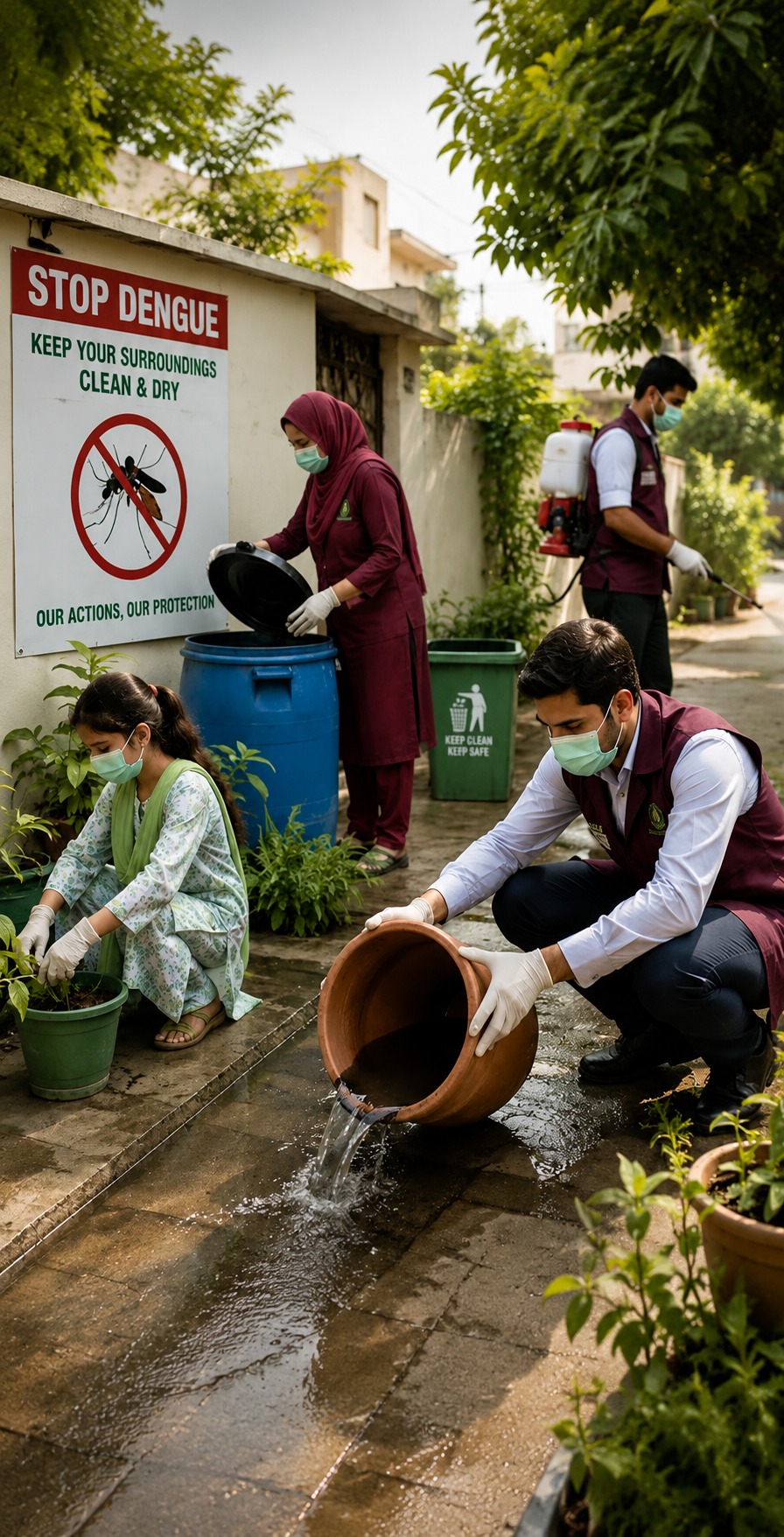 Community prevention in action
Our Dengue Services
Gondal Medical Complex is equipped to screen, monitor and treat dengue patients under close medical supervision.
Dengue Screening & Lab Testing
Dengue-related laboratory testing may be performed according to the stage of illness and clinical assessment. Results must be interpreted by a qualified healthcare professional.
Dedicated Observation & Isolation Beds
Patients requiring monitoring are cared for in a controlled environment with regular vitals tracking.
Platelet Monitoring & Transfusion Support
Close tracking of platelet counts with transfusion support arranged when clinically required.
24/7 Emergency & Physician Care
Our emergency team and physicians are available round the clock for urgent dengue cases.
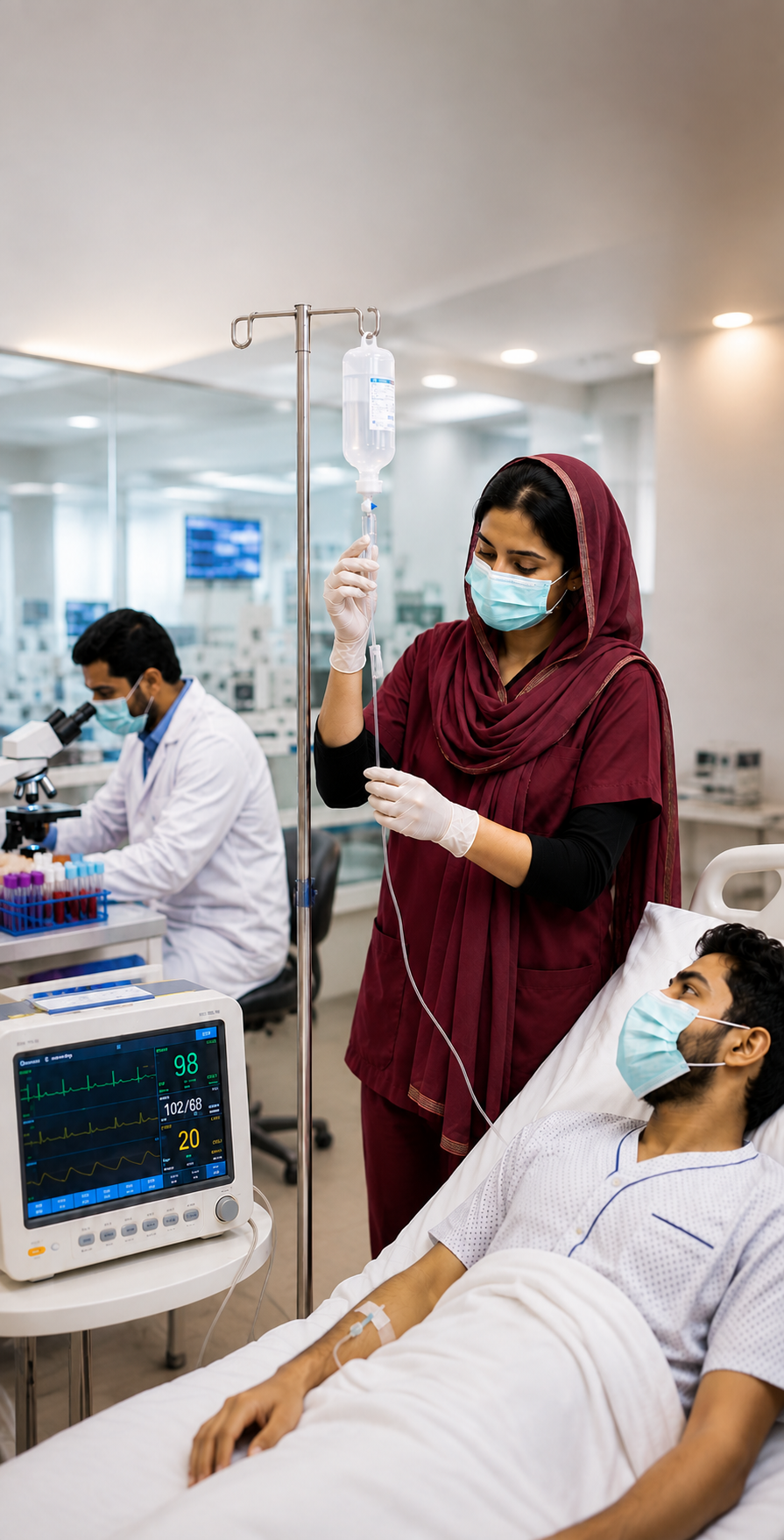 Our care team, ready around the clock
If You're Diagnosed
Most dengue cases can be managed with rest and monitoring, but it's important to follow these steps closely.
Rest and stay hydrated
Drink plenty of fluids — water, oral rehydration solution, or coconut water.
Monitor your temperature and symptoms
Keep a record of fever pattern and watch for any warning signs listed above.
Avoid certain medications
Do not take aspirin, ibuprofen, or other medicines without medical advice, as some medicines can increase bleeding risk. Consult a qualified healthcare professional.
Follow up with regular blood tests
Platelet counts should be monitored as directed by your physician until fully recovered.
Go to the emergency room if warning signs appear
Don't wait — severe symptoms can develop quickly and need immediate medical attention.
Worried about symptoms?
Don't wait it out — our team is here to help you get tested and treated quickly.
Call us
055-325-8403
Email us
gondalcomplexgrw1@gmail.com