
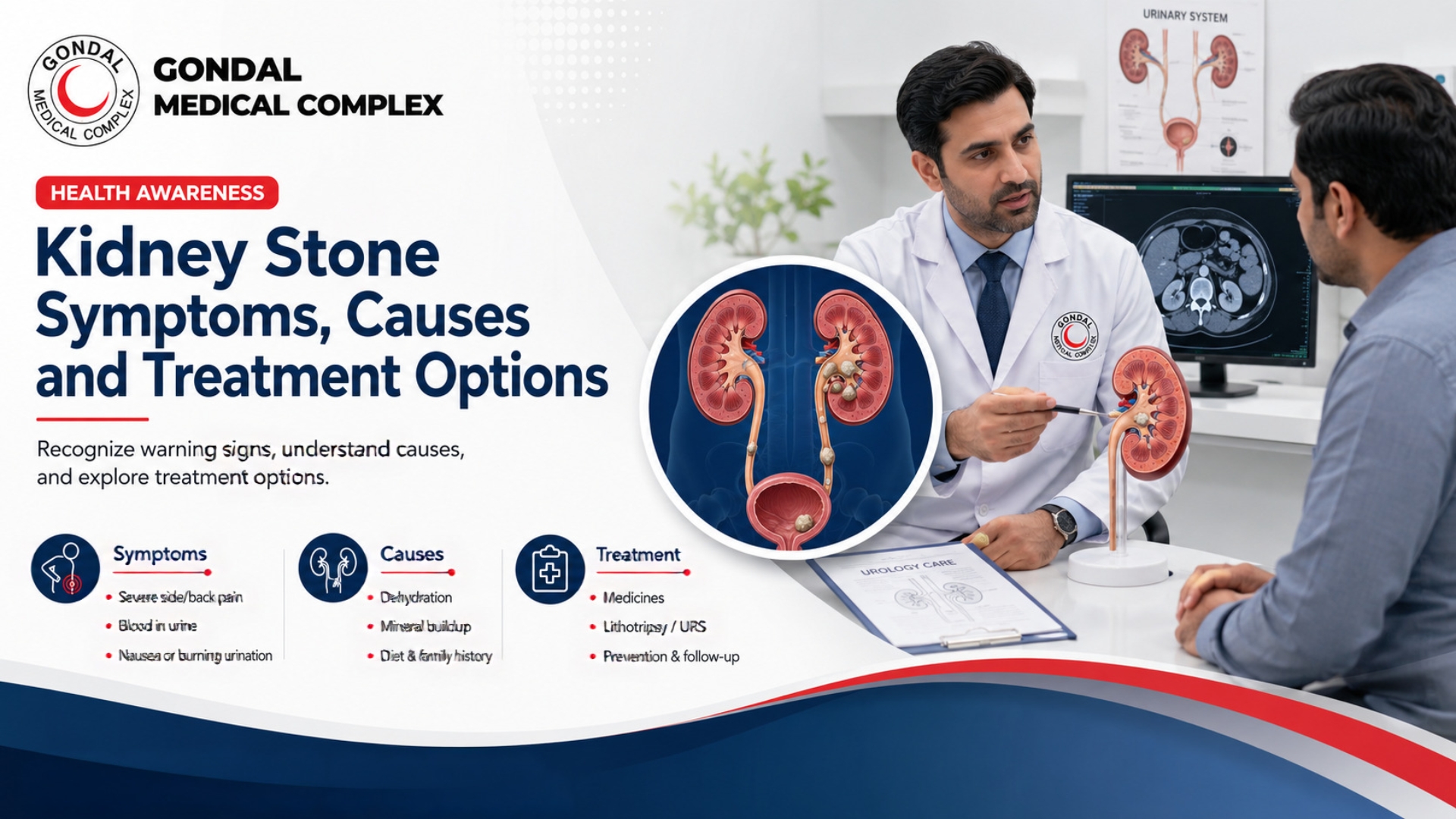
Kidney Stone Symptoms, Causes and Treatment Options
Sudden, severe pain in the side or lower back can be frightening, especially when it moves toward the lower abdomen or groin. Although several medical conditions can cause this type of pain, it is one of the most recognizable kidney stone symptoms.
Kidney stones are hard, pebble-like deposits that form when certain minerals and substances become highly concentrated in the urine. A small stone may remain unnoticed or pass naturally, while a larger stone can become stuck in the ureter, block urine flow and cause severe pain, bleeding or infection.
The correct treatment depends on the stone’s size, location, composition, the severity of symptoms and whether it is causing infection or urinary blockage. Some stones can be managed with medicines and monitoring, while others require procedures such as shock-wave lithotripsy, ureteroscopy or percutaneous nephrolithotomy.
Medical disclaimer: This article provides general health information and does not replace examination, diagnosis or treatment from a qualified doctor or urologist.
What Is a Kidney Stone?
Kidneys filter waste and excess fluid from the blood to produce urine. When urine contains high concentrations of minerals such as calcium, oxalate or phosphorus, crystals may form and gradually develop into a kidney stone.
Kidney stones are also known medically as:
- Renal calculi
- Nephrolithiasis
- Urolithiasis
- Urinary stones
Stones vary considerably in size and shape. Some may be as small as a grain of sand, while others can become large enough to obstruct part of the urinary system.
A stone can remain inside the kidney without causing noticeable symptoms. Pain commonly begins when the stone moves into the ureter, which is the narrow tube carrying urine from the kidney to the bladder.
Common Kidney Stone Symptoms
Symptoms depend on the size and position of the stone and whether it has caused obstruction or infection.
Common kidney stone symptoms include:
- Sharp pain in the side or back
- Pain below the ribs
- Pain moving toward the lower abdomen or groin
- Severe pain that comes and goes in waves
- Blood in the urine
- Pain or burning during urination
- Frequent or urgent need to urinate
- Passing only a small amount of urine
- Cloudy or unpleasant-smelling urine
- Nausea
- Vomiting
- Fever or chills when infection is present
Kidney stone pain may last for a short or extended period and can change in location as the stone moves through the urinary tract.
What Does Kidney Stone Pain Feel Like?
Kidney stone pain is often called renal colic. It is usually described as intense, cramping or sharp pain that comes in waves.
The pain may begin:
- On one side of the back
- Between the lower ribs and hip
- In the side of the abdomen
- In the lower abdomen
- In the groin
- In a testicle in some male patients
The pain can become stronger, improve temporarily and then return as the ureter contracts around the stone. A person may struggle to find a comfortable sitting or lying position.
The location of the pain may also change. A stone near the kidney may cause pain higher in the back or side, while a stone moving closer to the bladder may cause lower abdominal pain, groin pain, urinary urgency or burning.
Can Kidney Stones Cause Blood in Urine?
Yes. Kidney stones can irritate or injure the lining of the urinary tract, causing blood to appear in the urine.
The urine may look:
- Pink
- Red
- Brown
- Tea-coloured
In some cases, the blood is only detected through a laboratory urine test and is not visible to the patient. Blood in the urine should always be medically assessed because infections, kidney disease, bladder conditions and other health problems can cause the same symptom.
Kidney Stone Symptoms Near the Bladder
When a stone moves lower in the ureter and approaches the bladder, symptoms may begin to resemble a urinary tract infection.
These can include:
- Frequent need to urinate
- Sudden urinary urgency
- Burning or pain during urination
- Lower abdominal discomfort
- Pain at the tip of the penis or urethra
- Passing small amounts of urine
- Blood in the urine
A urine test may be needed to determine whether the symptoms are caused by a stone, infection or both.
Can Kidney Stones Cause Fever?
A kidney stone by itself does not usually cause a high fever. Fever, chills or shivering can indicate that a urinary infection is present.
A stone that blocks urine flow while infection is developing can become a medical emergency because bacteria and infected urine may become trapped above the blockage.
Seek urgent hospital care for kidney stone pain accompanied by:
- Fever
- Chills or shaking
- Confusion
- Severe weakness
- Persistent vomiting
- Rapid heartbeat
- Reduced urine output
- Feeling seriously unwell
Urinary obstruction combined with infection requires urgent medical assessment and may require drainage of the urinary system in addition to antibiotics. NIDDK advises patients with severe pain, bleeding or other kidney-stone symptoms to seek timely professional care to prevent complications such as urinary infection or loss of kidney function.
When Are Kidney Stones an Emergency?
Go to an emergency department or seek immediate medical assistance when:
- Pain is severe or cannot be controlled
- Fever or chills accompany the pain
- You cannot pass urine
- You are passing very little urine
- Vomiting prevents you from drinking fluids
- You feel faint, confused or extremely weak
- There is a large amount of blood in the urine
- You have only one functioning kidney
- You are pregnant
- You have known kidney disease
- Symptoms are rapidly worsening
A blocked urinary tract can affect kidney function, while dehydration from repeated vomiting may require intravenous fluids. Larger stones, severe pain and urinary blockage may require urgent treatment.
What Causes Kidney Stones?
Kidney stones form when the urine contains more crystal-forming substances than the available fluid can dilute. Crystals may then join together and become larger.
Important contributing factors include:
- Not drinking enough water
- Losing fluid through sweating
- High levels of calcium, oxalate, phosphorus or uric acid in urine
- High salt intake
- Certain dietary patterns
- Recurrent urinary infections
- Digestive disorders or intestinal surgery
- Obesity
- Gout
- Hyperparathyroidism
- Inherited conditions
- Urinary tract blockage
- Certain long-term medicines
People living, working or exercising in hot weather may need more fluid because increased sweating can reduce urine volume and make it more concentrated.
Does Dehydration Cause Kidney Stones?
Dehydration is an important and preventable risk factor.
When a person does not drink enough fluid, the body produces less urine. That urine becomes more concentrated, making it easier for minerals to crystallize and form stones.
Risk can increase during:
- Hot weather
- Outdoor physical work
- Heavy exercise
- Fasting without sufficient fluid intake
- Repeated vomiting or diarrhoea
- Long working hours without water
- Illnesses that cause excessive sweating
Drinking enough water is one of the most important measures for preventing most types of kidney stones. The appropriate amount depends on the weather, physical activity, medical history and whether the patient has kidney or heart disease.
Main Types of Kidney Stones
There are four main types of kidney stones.
Calcium Stones
Calcium stones are the most common type. They may contain calcium oxalate or calcium phosphate.
Despite the name, patients should not automatically stop eating calcium-containing foods. Appropriate dietary calcium can bind oxalate in the digestive tract and may help reduce calcium oxalate stone formation. The correct calcium intake should be discussed with a doctor or dietitian.
Uric Acid Stones
Uric acid stones can form when urine is consistently too acidic.
Risk may be associated with:
- Gout
- High uric acid levels
- Obesity
- Dehydration
- High intake of some animal proteins
- Metabolic conditions
Some uric acid stones may be treated or prevented with medicines that make the urine less acidic or reduce uric acid production.
Struvite Stones
Struvite stones are associated with urinary tract infections. They can grow quickly and may become large.
Treatment usually requires management of the infection and, in many cases, removal of the stone. Antibiotics may be prescribed according to the patient’s condition and test results.
Cystine Stones
Cystine stones are caused by an inherited condition called cystinuria. This condition allows excessive cystine to enter the urine and form stones.
Patients with cystine stones may require higher fluid intake and long-term specialist treatment.
Who Is More Likely to Develop Kidney Stones?
Risk may be higher in people who:
- Have previously had a kidney stone
- Have a family history of stones
- Do not drink enough fluids
- Frequently become dehydrated
- Have obesity
- Have gout
- Have recurrent urinary infections
- Have chronic bowel inflammation
- Have undergone gastrointestinal surgery
- Have hyperparathyroidism
- Have a urinary tract abnormality or blockage
- Take selected medicines over an extended period
A person who has developed one kidney stone has an increased chance of developing another. Stone analysis and metabolic testing may therefore be recommended after the stone passes or is removed.
Can Food Cause Kidney Stones?
Diet can influence stone risk, but recommendations depend on the type of stone.
Factors that may increase risk in selected patients include:
- Excessive sodium or salt
- Large quantities of animal protein
- High-oxalate foods in people prone to calcium oxalate stones
- Sugary or highly processed drinks
- Inadequate dietary calcium
- Insufficient fluid intake
High sodium intake can increase calcium in the urine. Patients with certain stones may also be advised to reduce animal protein or selected high-oxalate foods. However, a restrictive diet should not be started without knowing the stone type and the patient’s nutritional needs.
How Are Kidney Stones Diagnosed?
Doctors diagnose kidney stones using:
- Medical history
- Description of symptoms
- Physical examination
- Urine tests
- Blood tests
- Imaging tests
The doctor may ask about previous stones, family history, diet, fluid intake, medicines and existing medical conditions.
Urine Test
A urinalysis can identify:
- Blood in the urine
- White blood cells
- Bacteria
- Crystals
- Minerals associated with stones
- Signs of urinary infection
A urine culture may be required when infection is suspected.
Blood Tests
Blood tests may assess:
- Kidney function
- Calcium
- Uric acid
- Electrolytes
- Signs of infection
- Other minerals associated with stone formation
Abnormal kidney-function results may indicate obstruction, dehydration or another kidney problem.
Ultrasound
Ultrasound uses sound waves rather than radiation. It can identify many kidney stones and may show swelling caused by a urinary blockage.
Ultrasound may be preferred in pregnancy and in situations where radiation exposure should be minimized. However, very small stones or stones in certain parts of the ureter may be difficult to see.
CT Scan
A non-contrast CT scan is commonly used to identify kidney stones. It can show the stone’s:
- Size
- Location
- Number
- Density
- Effect on the urinary tract
CT may also help identify another cause of severe abdominal or side pain. NIDDK identifies non-contrast CT as a commonly used imaging examination for the urinary tract.
X-Ray
Some kidney stones are visible on an abdominal X-ray, while others are not. X-rays may be used for selected patients or for monitoring a known stone.
Can Kidney Stones Pass Naturally?
Many small stones can pass through the urinary tract without surgery. Whether a stone is likely to pass depends on:
- Its size
- Its location
- Urinary tract anatomy
- The degree of blockage
- The patient’s symptoms
- The presence of infection
- Kidney function
A small stone may take several days or weeks to pass. Larger stones, blocked stones or stones causing severe symptoms may require medical intervention.
Treatment for Small Kidney Stones
A doctor may recommend conservative treatment when the stone is small, there is no serious infection, kidney function is stable and symptoms can be controlled.
Treatment may involve:
- Appropriate pain medicine
- Anti-nausea medicine
- Adequate fluid intake
- Medicine to relax the ureter in selected patients
- Monitoring symptoms
- Follow-up imaging
- Passing urine through a strainer to collect the stone
The collected stone may be analysed in a laboratory to determine its type and guide prevention.
Should You Drink Large Amounts of Water During an Attack?
Patients should generally remain adequately hydrated, but forcing excessive amounts of water during severe pain or complete obstruction may not make the stone pass faster and can worsen discomfort.
Follow the treating doctor’s instructions, especially when:
- You are vomiting
- Urine output is reduced
- You have kidney disease
- You have heart disease
- You are receiving intravenous fluids
- A blockage has been identified
Patients who cannot keep fluids down may require hospital treatment for dehydration.
Medicines for Kidney Stones
Medicines may be used to:
- Control pain
- Reduce nausea or vomiting
- Help selected ureteric stones pass
- Treat urinary infection
- Change urine acidity
- Reduce calcium or uric acid in urine
- Prevent another stone
Medication depends on the stone type and the patient’s kidney function, other conditions and current medicines.
Examples of preventive treatment can include potassium citrate, selected diuretics, allopurinol or antibiotics. These medicines should only be taken when prescribed because they can cause side effects and are not appropriate for every stone type.
When Is a Procedure Needed?
A procedure may be required when:
- The stone is too large to pass
- Pain remains severe
- The urinary tract is blocked
- Kidney function is affected
- Infection is present
- The patient cannot stop vomiting
- The stone has not moved
- Repeated bleeding occurs
- The stone is growing
- Both kidneys are affected
- The patient has only one functioning kidney
The urologist selects the procedure based on the stone’s size, location and composition as well as the patient’s overall health.
Shock-Wave Lithotripsy
Shock-wave lithotripsy uses externally generated shock waves to break a kidney stone into smaller fragments. These fragments may then pass through the urine.
It is generally performed with pain control, sedation or anaesthesia, depending on the patient and facility.
Lithotripsy may not be suitable for every stone. Success can depend on:
- Stone size
- Stone location
- Stone hardness
- Body size
- Urinary anatomy
- Pregnancy status
- Bleeding risk
More than one treatment session may occasionally be needed.
Ureteroscopy
During ureteroscopy, a thin instrument is passed through the urethra and bladder into the ureter.
The urologist may:
- Locate the stone
- Remove it with a small basket
- Break it using a laser
- Place a temporary ureteric stent
Ureteroscopy is performed with anaesthesia. Many patients can go home on the same day, depending on the procedure and their condition.
Percutaneous Nephrolithotomy
Percutaneous nephrolithotomy, commonly called PCNL, is generally used for larger or more complex kidney stones.
During the procedure:
- A small incision is made in the back
- A viewing instrument is passed into the kidney
- The stone is broken and removed
- A temporary drainage tube or stent may be placed
PCNL is performed in a hospital under anaesthesia and may require a hospital stay.
What Is a Ureteric Stent?
A ureteric stent is a thin, flexible tube placed between the kidney and bladder. It helps urine drain around a blockage or allows the urinary tract to heal after a procedure.
Temporary stent symptoms can include:
- Frequent urination
- Urinary urgency
- Burning
- Blood in the urine
- Bladder discomfort
- Side pain during urination
The stent usually needs to be removed or replaced at the time specified by the urologist. It should not be forgotten.
Can Kidney Stones Damage the Kidneys?
Most kidney stones do not cause permanent kidney damage when they are diagnosed and treated appropriately.
However, an untreated blocked stone may contribute to:
- Urinary infection
- Kidney infection
- Repeated bleeding
- Loss of kidney function
- Severe or recurrent pain
The risk is greater when obstruction lasts for an extended period, infection is present or the patient has only one functioning kidney.
How to Prevent Kidney Stones
Preventive treatment should be based on the type of stone and any abnormalities found in blood, urine or stone analysis.
Drink Enough Water
Adequate hydration keeps urine diluted and helps flush out substances that can form crystals.
Water is usually the preferred drink. The correct daily amount varies according to heat, physical activity, body size and medical conditions. People working outdoors in Pakistan’s hot weather may require additional fluid to replace sweat losses.
Reduce Salt Intake
High salt intake can increase urinary calcium and promote stone formation in susceptible patients.
Reduce:
- Extra table salt
- Pickles
- Salty snacks
- Processed meats
- Packaged sauces
- Instant foods
- Highly salted restaurant meals
Patients with high blood pressure, kidney disease or heart disease should follow their doctor’s sodium recommendations.
Do Not Remove Calcium From Your Diet Without Advice
Dietary calcium is important for bones and may help bind oxalate inside the intestine. Removing dairy products or other calcium sources unnecessarily can increase nutritional risks and may not prevent calcium stones.
Calcium supplements should be discussed with a healthcare professional, particularly in people who have previously formed stones.
Adjust Oxalate According to the Stone Type
Patients with calcium oxalate stones may be advised to limit selected high-oxalate foods, such as spinach, wheat bran, nuts or other foods identified by their clinician.
This does not mean every kidney-stone patient should avoid all oxalate-containing foods. Dietary advice should consider the complete nutritional pattern.
Review Animal Protein Intake
Large amounts of meat and other animal proteins may contribute to uric acid and selected calcium stones in susceptible people.
A doctor or dietitian may recommend balancing animal protein with plant-based options such as lentils, beans and peas, depending on the stone type and the patient’s health.
Maintain a Healthy Weight
Excess body weight is associated with a higher risk of kidney stones. Gradual, sustainable weight management can support urinary and general health. Extreme high-protein or crash diets should be avoided unless medically supervised.
Tests After Passing or Removing a Stone
To reduce the risk of recurrence, a doctor may recommend:
- Laboratory analysis of the stone
- Blood calcium and uric acid tests
- Kidney-function tests
- Urine testing
- A 24-hour urine collection
- Follow-up ultrasound, X-ray or CT
- Assessment for infection
- Review of diet and medicines
A 24-hour urine test can measure urine volume and levels of minerals that contribute to stone formation.
Frequently Asked Questions
What are the first symptoms of a kidney stone?
Early symptoms may include pain in one side of the back or abdomen, blood in the urine, urinary urgency, burning during urination, nausea or vomiting. Some small stones cause no symptoms until they begin moving.
Where is kidney stone pain located?
Pain commonly begins in the back or side below the ribs and may travel toward the lower abdomen, groin or testicle. Its location can change as the stone moves.
Does kidney stone pain remain constant?
It may come and go in intense waves. Some patients also experience a continuous dull ache between stronger episodes.
Can kidney stone pain occur without blood in urine?
Yes. Visible blood is not present in every patient. A urine test may detect microscopic blood, while some patients may have little or no detectable bleeding.
Can a kidney stone cause frequent urination?
Yes. A stone near the bladder can cause urinary urgency, frequency and burning because it irritates the lower urinary tract.
Can kidney stones pass without treatment?
Many small stones pass naturally, but larger, blocked or infected stones may require urgent treatment or a procedure.
How long does a kidney stone take to pass?
Passing time varies according to stone size, location and urinary anatomy. It may take days or several weeks. Follow-up is important to confirm that the stone has passed and urine flow is no longer blocked.
Is ultrasound enough to diagnose kidney stones?
Ultrasound can detect many stones and signs of obstruction, but some ureteric stones may be difficult to see. A non-contrast CT may be recommended when the diagnosis remains uncertain or detailed information is required.
Does lemon water remove kidney stones?
Citrus drinks contain citrate, which may help prevent some stones from forming, but lemon water does not reliably dissolve or remove every existing stone. Stone treatment depends on its composition, size and location.
Should kidney-stone patients avoid milk?
Not automatically. Appropriate dietary calcium may help reduce calcium oxalate stone formation. Patients should not remove dairy or other calcium sources without medical or nutritional advice.
Can kidney stones return after treatment?
Yes. Recurrence is possible, especially without adequate hydration or management of the underlying cause. Stone analysis, blood testing and 24-hour urine assessment can help guide prevention.
Conclusion
Recognizing kidney stone symptoms early can help prevent severe pain, urinary infection and kidney complications. Typical symptoms include sharp side or back pain, pain moving toward the groin, blood in the urine, nausea, vomiting, urinary urgency and burning during urination.
Fever, chills, inability to urinate, persistent vomiting or uncontrolled pain require urgent medical assessment. These symptoms may indicate infection, dehydration or urinary blockage.
Small stones may pass naturally with medical monitoring and symptom control. Larger or obstructing stones may require shock-wave lithotripsy, ureteroscopy, PCNL or another urological procedure.
Long-term prevention usually involves adequate hydration, lower salt intake and dietary changes tailored to the specific stone type.
Call to Action
Do not ignore severe side pain, blood in the urine, painful urination or repeated kidney-stone symptoms. Proper urine testing, blood investigations and imaging can determine whether a stone is present and whether it requires urgent treatment.
Gondal Medical Complex provides specialist consultations, emergency support, radiology and imaging services, dialysis and nephrology support in Gujranwala. Its website also lists a qualified urology specialist among its medical team. Patients should contact the hospital to confirm appointment and diagnostic-service availability before visiting.
Visit Gondal Medical Complex at https://gondalmedicalcomplex.com/ for appointment information and professional guidance about the appropriate department for your symptoms.